
By Leo John
In Revenue Cycle Management (RCM), claim denials are one of the important factors that disturb the flow of smooth operational billing. It may also increase the administrative burden on your staff. In order to reduce claim denial possibilities, it is necessary to understand the crucial aspects that optimize your cash flow billing and minimize claim denials. This blog highlights the reasons that cause claim denials in operational billing and the facets that help to overcome the denials.
Common Reasons that Influence Common Denial Reasons
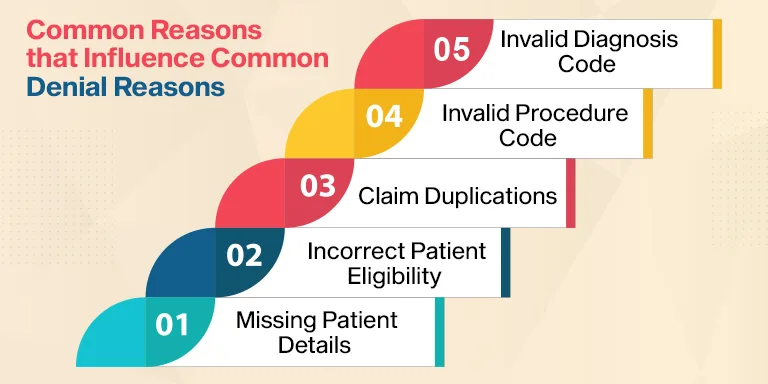
Missing Patient Details
When crucial patient or claim detail is missing, insufficient, or submitted incorrectly, it might lead to denial. Consider some examples including inaccurate demographic information, missing subscriber information, incorrect insurance IDs, and incorrect date of birth. Any inconsistency could prevent the claim from being handled because these details are required to confirm eligibility and coverage.
- Inaccurate information entered when registering patients
- No regular update of data
Solutions to Avoid It
- Confirm insurance information and demographics regularly
- Use automated eligibility verification tools
- Teach front desk staff to verify information before submitting a claim
Incorrect Patient Eligibility
Why it Happens?
- Insurance not active for date of service
- Not monitoring benefits
How to Prevent It?
- Verify eligibility during scheduling and again at check-in
- Confirm coverage levels, copays, and network rules before service
- Use real-time eligibility checks integrated with your EHR
Claim Duplications
Do you have any idea how these error possibilities occur? When the same claim for service is submitted multiple times for the same patient, provider, and date of service, then this affects your procedural credibility. Even small workflow gaps can cause a claim to be flagged as a duplicate. In order to get rid of these kinds of duplication records, regular and consistent follow-ups are required in addition to coding efficiency.
Why it Happens?
- Same claim submitted multiple times
- Claim resubmitted before the payer finishes processing
How to Prevent It?
- Track claim status before resubmitting
- Use claim scrubber tools to detect duplicate submissions before sending to payer
Invalid Procedure Code
Why it Happens?
- The CPT/HCPCS code is not recognized or is out of date
- The supporting diagnosis and procedure do not match
- Billing regulations relevant to payers were not adhered to
How to Avoid It?
- Refer to the most recent CPT/HCPCS changes to verify procedure codes
- Verify payer policies for restrictions on frequency, bundling, and coding
- Make that the billable service is adequately supported by the clinical notes
Invalid Diagnosis Code
Why it Happens?
- ICD-10 code does not justify the medical service
- Diagnosis does not match coverage criteria
- Code is no longer valid in current coding guidelines
How to Prevent It?
- Confirm diagnosis codes directly from recent clinical documentation
- Review ICD-10 code updates at least quarterly to avoid using discontinued codes
How Does Delay in Claim Submission Affect Your Operational Billing
Embrace Operational Efficiency with the Right Solutions
Preventing OP billing denials helps in improved scheduling, documentation, coding, and billing procedures. This reduces resubmissions and improves patient billing experience by facilitating quicker payments. In addition to helping clinics increase revenue collection while focusing on providing high-quality patient care, this ensures that claims are processed effectively.
About the Author

Leo John is a finance strategist and IT professional at MHRCM and is passionate about revolutionizing revenue cycle management (RCM).