
Steps Involved in Radiology Billing Services
1. Insurance Verification and Authorization
- Radiology coding experience: The team should understand imaging procedures, applicable modifiers and payer specific requirements.
- Accounts receivable follow up: Ask how unpaid claims are tracked and what happens when an insurer does not respond.
- EHR compatibility: The billing provider should be able to work with your existing electronic health record and practice management systems.
- Financial reporting: Reports should help you review collections, denial trends and outstanding balances.
- Security and compliance: Confirm how patient information is protected and how HIPAA responsibilities are managed.
- Claim turnaround: Find out how quickly claims are reviewed and submitted, and how billing delays are handled.
It’s also worth asking who will be your main point of contact. When a claim needs urgent attention, clear communication can save your staff time.
- Manage cash flow: Timely submissions and consistent follow up can reduce avoidable delays.
- Limit preventable denials: Checking coding, authorization and documentation before submission helps catch common problems.
- Support compliance: Complete records and appropriate coding help substantiate billed services.
- Improve patient billing: Correctly identifying deductibles, copayments and coinsurance helps practices explain what patients may owe.
- Understand financial performance: Regular reports can reveal recurring issues with particular payers or claim types.
Types of Radiology Billing Services
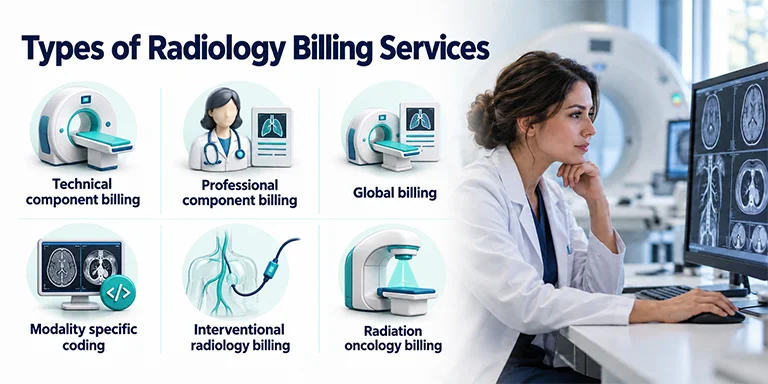
Technical component billing : Covers the technical side of an imaging procedure, which may include equipment, supplies and technical staff.
Professional component billing : Covers the radiologist’s professional work, including interpreting images and preparing the report.
Global billing : Applies when an eligible billing entity reports both the technical and professional components together.
Modality specific coding : CT scans, MRIs, X-rays and ultrasounds have different coding requirements based on the procedure performed and the supporting documentation.
Interventional radiology billing : Involves image guided procedures such as angiography and biopsies, where detailed documentation and procedure specific coding are important.
Radiation oncology billing : Covers billing and coding requirements associated with radiation treatment services.
How Outsourced Billing Can Support Radiology Practices
Choosing Radiology Billing Support With MHRCM
About the Author

Elena Kinsley is a seasoned Content Strategist and Chief Technology Officer (CTO) specializing in medical revenue cycle management (RCM).