
Understand ICD-10 Codes
i) ICD-10-PCS (Procedural Coding System)
This system is not included in the Certified Professional Coder (CPC) examination. It is used to code hospital impatient procedures and focuses primarily on procedural data.
ii) ICD-10-CM (Clinical Modification)
This is the main focus for outpatient and professional fee coding. Diseases, illnesses, and other medically significant data are coded using this pattern.
There are two portions to ICD-10-CM:
Alphabetic Index
Tabular List
A numerical list of codes organized by condition and body system, used to identify the final billable code.
Why Are ICD-10 Codes Important in Medical Billing?
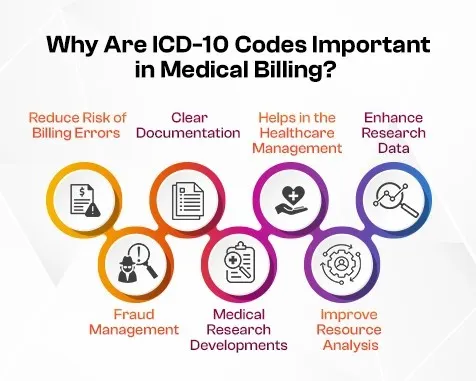
Reduce Risk of Billing Errors
ICD-10 codes reduce billing errors by ensuring that filed claims appropriately reflect services rendered. This reduces the possibility of claims being rejected because of a diagnosis of uncertainty. This efficiency enhances the cash flow and saves you time for patient care.
Clear Documentation
One of the important advantages of ICD 10 codes is that it delivers complete and accurate information to providers. ICD-10 codes provide a better representation of the patient’s condition by highlighting laterality, the phase of the treatment, and particular diagnosis. Accurate documentation improves patients’ medical experience. It also benefits healthcare professionals who may access the patient’s medical records in the future.
Helps in the Healthcare Management
By accurately documenting operations and results, hospitals that use ICD-10 coding reports decreased surgical resource waste. Supported by ICD-10 codes, this study assists management in anticipating demand for surgical treatments, which helps with scheduling and preventing overcrowding.
In order to enhance local and national health, public health authorities might map illness trends and launch strategies aimed at high-burden areas, necessitating additional funds or resources.
Enhance Research Data
ICD-10 codes find previously unidentified health issues and lower medical costs. When researchers have access to the pertinent ICD-10 codes, they can examine large populations and gather factual evidence to create practice guidelines. In clinical research trials, ICD-10 codes play a great part in providing better assessment on impact data, leading to efficient reporting.
Fraud Management
ICD-10 codes can reduce the cost of medical care by identifying possible fraud, discrepancies between procedure codes and diagnoses, and inflated claims. It also figures out the inappropriate combination of codes.
Medical Research Developments
This resource enables studies that seek to improve healthcare delivery and find new therapeutic techniques. This helps researchers to figure out disease patterns and develop new treatments. For example, radiation therapy outcomes across racial groups are examined using ICD-10 staging classifications.
Improve Resource Analysis
How Does ICD 10 Codes Influence Medical Billing?
Revenue Cycle Management
Adherence to Regulations and Compliance
Public Health Programs
Legal Medicine
Performance Enhancement
Resource Allocation and Planning
Conclusion
About the Author

Elena Kinsley is a seasoned Content Strategist and Chief Technology Officer (CTO) specializing in medical revenue cycle management (RCM).