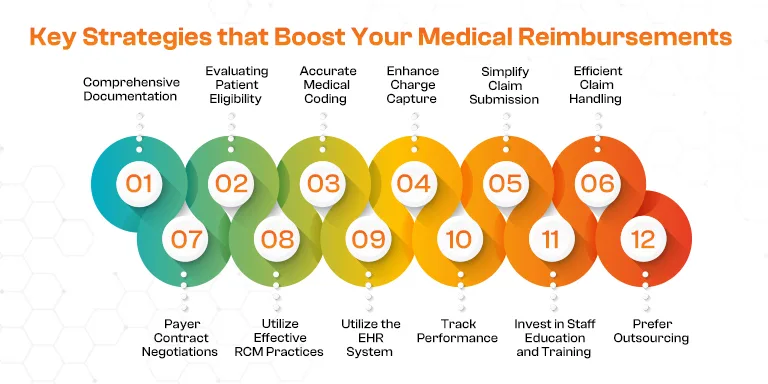
Do you know that effective medical reimbursements depend on accurate documentation? It acts as evidence of medical need, which is essential for payment. A thorough patient history, physical examination results, diagnostic test results, treatment plans, and the medical decision-making process should all be included in the record.
You must be aware that even before a patient reaches your front desk, the reimbursement procedure starts. This eligibility verification step reduces the possibility of claim denials such as pre-authorization requirements, excluded therapies, or limitations in insurance coverage.
When a patient makes an appointment, confirm their coverage status, effective dates, deductible amounts, and insurance percentages. By proactively confirming coverage, the practice can notify patients about potential out-of-pocket expenses and avoid last-minute difficulties that impact patient satisfaction and practice revenue.
Accurate coding is essential for compliance and medical reimbursement. Have you ever wondered how codes are applied when patient services are billed? After being converted into standard codes, the patient’s diagnosis, treatment, and services are utilized for billing. Inaccurate coding can deliver postponed or rejected reimbursement. One must be proficient in using appropriate medical codes to maximize reimbursement.
To find and fix problems, conduct routine coding audits and stay current on the most recent ICD-10, CPT, and HCPCS codes. Continually educate and train coding staff and utilize specialized codes rather than generic ones. Additionally, confirm that the coding corresponds with the verified medical necessity, because even a small error code entry might lead to payment delays or claim denial.
Charge capture serves as the systematic documentation of all services provided, consultations, procedures, supplies, and prescriptions in order to facilitate payment. Incomplete or delayed charge capture leads to revenue leakage. Hence, to avoid losing details or incorrect values, you need to prefer electronic charge capture systems. Another fact is you can educate healthcare providers about the impact of clear documentation on billable services. Also, use this effective system to record appropriate charges relevant to practices.
Smooth claims submission process includes electronic claims filing to mitigate processing time and errors. Use claims scrubbing software to find mistakes before submitting. Then, submit claims quickly to prevent delays and rejections. Regularly follow up on outstanding payments and get updates on claim status. This significantly impacts your medical reimbursements.
If there are any coding issues, then the claim is rejected. When examining filed claims, insurance companies are subject to stringent restrictions. Inaccurate patient and provider information, coding errors, and inadequate or absent documentation are the main reasons why many claims are denied.
In this case, you should always have a clear check of the claims before submitting them to save time and effort on resubmitting the claims. You must examine denial patterns to identify underlying issues and create a methodical strategy to deal with and challenge denials. Educate your employees on the appropriate appeal procedures for various payers, monitor the results of appeals, and modify procedures as necessary.
Better medical reimbursement rates may result from proactive contract negotiations with payers. For this, you must routinely examine and evaluate payer contracts. Next, gather information that displays the quality and significance of services rendered. Then make reasonable negotiations and finalize reimbursement rates.
Before offering services, confirm the patient’s eligibility and insurance and at the time of service, collect deductibles and co-pays. Establish a transparent financial policy and inform patients of it. Also, you need to analyze data for finding areas of improvement.
It is necessary to use practice management software such as EHR for managing billing and claims. Use the previously stated techniques to ensure eligibility verification.
Healthcare providers must track and report on quality metrics, focus on patient outcomes, and satisfaction. You can also attend conferences and webinars relevant to industry trends, subscribe to relevant publications and newsletters, and join professional institutions.
Well-trained staff are crucial to providing regular training in coding, documentation, and billing processes. You can provide compliance training for all staff and encourage them to obtain relevant certifications.
Since claim denial and rejection handing involve complex procedures and consumes a lot of time, you can outsource your medical coding and billing to best organizations and save time. In the long run, you can focus on patient care while saving time and personnel costs. It leads to improved medical reimbursements for healthcare providers.